MENU
Aerial view of parliament hill in ottawa
01
Home
02
Services
03
Sectors
04
Team
05
Our Work
06
Updates
07
Careers
08
Contact
Services
01
Government Relations
02
Communications & Digital
03
Advisory Services
Sectors
01
Energy
02
Environment
03
Health Care
Updates
01
Insights
02
News
EN
FR
ServicesSectorsTeamOur WorkUpdates
EN
FR
insights
updates
November 14, 2022

Sussex Overview & Analysis: Ontario Fall Economic Statement

written by
Ontario Team
Sussex Overview & Analysis: Ontario Fall Economic Statement

This afternoon, Ontario’s Finance Minister, Hon. Peter Bethlenfalvy, delivered the first fiscal report of the Ford Government’s second mandate. Billed by the government as the first-ever progress report on its plan to build Ontario, the Fall Economic Statement (FES) made clear the government will keep pursuing the economic agenda it laid out in the March 2022 Budget and on which it was re-elected in June 2022.

True to the report’s title, Ontario’s Plan to Build: A Progress Update, today’s FES spends nearly as much time highlighting the progress made-to-date on the 2022 Budget’s priorities as it does laying out new programs and initiatives.

The FES is a legal obligation, providing an update on the annual Budget about halfway through the fiscal year. In recent years, these updates have often served as “mini-budgets,” introducing new programs, tax breaks, or other policies to address changed economic conditions, fiscal situation or (in truth) political circumstances. Arguably, economic conditions have changed since the 2022 Budget was unveiled in March. Yet, as the first fiscal review from a newly re-elected government, the continuity signaled by today’s FES should not come as a surprise. Had the Ford government moved too radically from its platform this soon after re-election, it could have raised a red flag to investors, financial markets, and others that the economic headwinds Ontario is facing are much stronger than people are forecasting.

Below, we have broken down the numbers that were delivered today, along with a summary of the key progress reports and significant new initiatives.
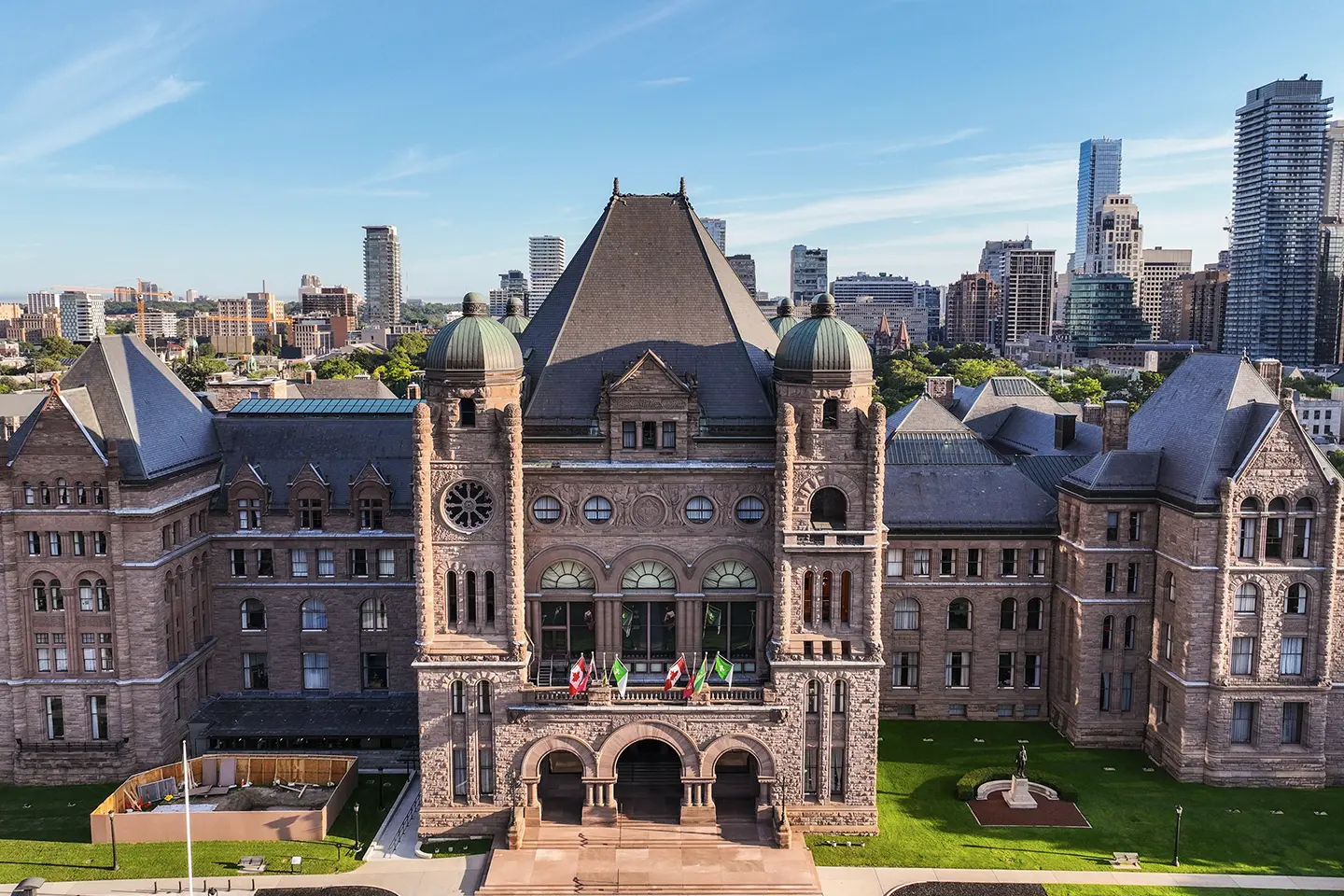

Read the full overview and analysis.

No items found.
share article
Link copied
‍

RECENT POSTS

Canada’s Nuclear Renaissance, Continued
June 26, 2026

Canada’s Nuclear Renaissance, Continued

Canada unveiled its first-ever sectorwide Nuclear Energy Strategy, setting concrete build-out targets: up to 10 new domestic reactors by 2040, four new export markets by 2040, across a four-pillar plan covering domestic builds, exports, fuel/waste management, and fission/fusion innovation. The strategy stays technology-agnostic between CANDU, AP1000, and Gen IV designs, leans on existing financing tools rather than new funding (with a dedicated financing policy due next April), and frames nuclear as central to doubling Canada's grid capacity and capturing global export demand as countries move away from Russian supply chains.

Canada Tables Sweeping New Federal Privacy Law
June 16, 2026

Canada Tables Sweeping New Federal Privacy Law

Bill C-36, the Protecting Privacy and Consumer Data Act, would represent the most significant overhaul of Canada's private sector privacy regime in more than 25 years.

Not all nuclear is created equal
June 11, 2026

Not all nuclear is created equal

Traditional large-scale nuclear plants have long demonstrated that it is possible to produce dependable electricity at scale without direct greenhouse gas emissions. They provide steady, around-the-clock power that supports modern economies while helping jurisdictions meet climate goals.

view all
Thank you! Your submission has been received!
Oops! Something went wrong while submitting the form.
company
HomeTeamCareersContactTerms & PoliciesAccessibility
explore
ServicesSectorsOur WorkUpdates
follow us
ALL RIGHTS RESERVED © 2020
Land Acknowledgement