Ontario Tables 2026 Fall Economic Statement
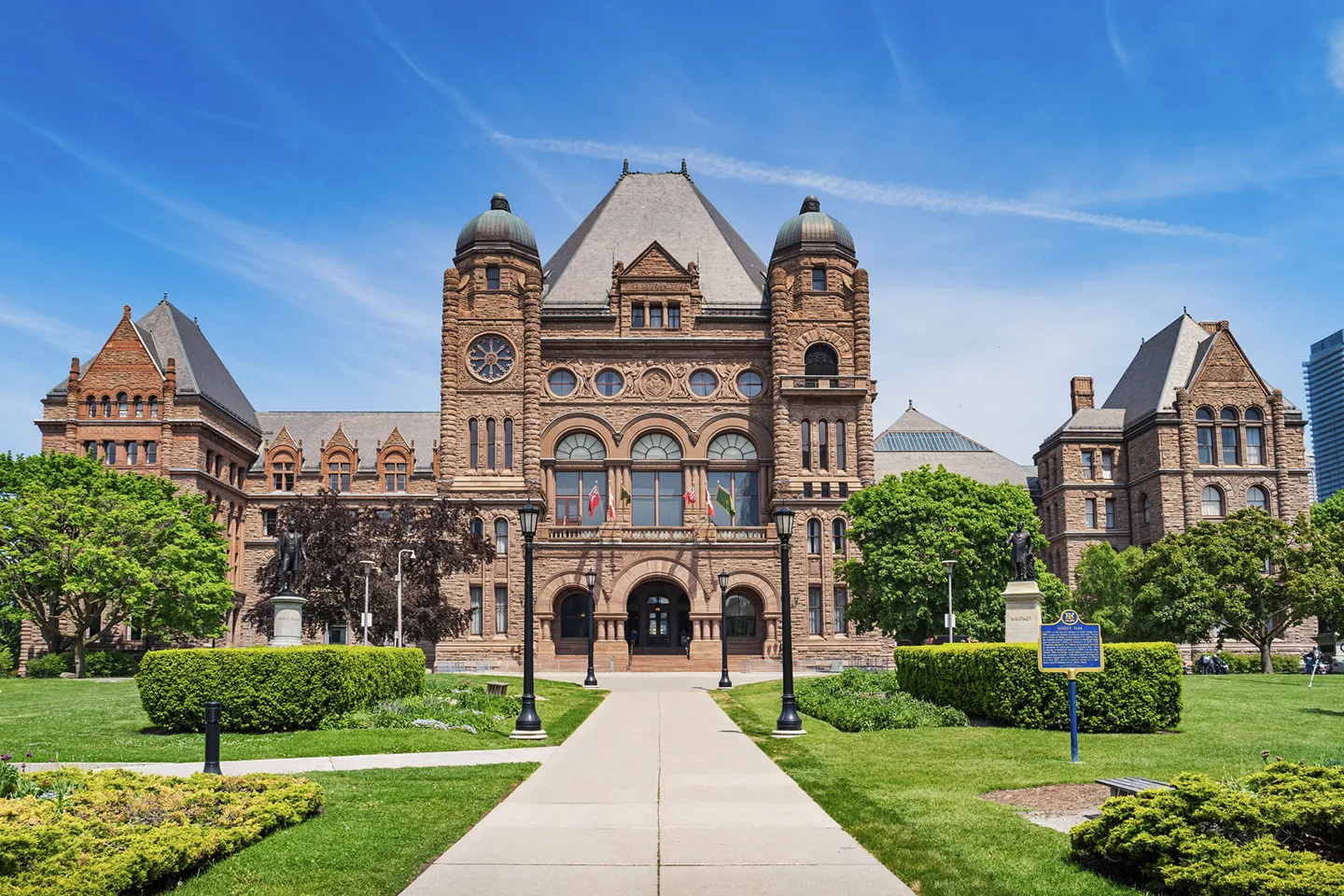
Ontario's Minister of Finance Peter Bethlenfalvy released the provinces 2026 Fall Economic Statement (FES), setting out an updated fiscal picture and outlining the government’s near-term economic priorities as it looks toward 2027.
What You Need to Know
- This year's FES is a traditional fiscal update rather than "mini-budget."
- Minister Bethlenfalvy's message highlighted Ontario's economic resilience in the face of United States' trade war with Canada and provided an update on the government's plan to protect Ontario businesses and workers.
- New initiatives mainly focus on tax credits and rebates for businesses and consumers and streamlining permitting and processes.
- Ontario has a path to balance by 2029-2030. The 2026-27 deficit has increased to $16.9 billion from the projected $13.8 billion in Budget 2026.
- Total revenue it $232.6 billion while total spending is $247.3 billion.
- Real GDP is expected to grow 0.5%, which is half a percent lower than what was projected in Budget 2026.
Analysis
The 2026 Fall Economic Statement lands the same week as the return of the Ontario Legislature. Rather than relying on the FES as a vehicle for new programs and spending measures, the government appears increasingly focused on improving the conditions for private-sector investment and economic growth through a combination of tax competitiveness, regulatory reform and efforts to accelerate approvals.
This approach is already evident in Bill 140, the Building Ontario Faster Act, 2026, which was introduced on Tuesday, October 27, alongside the return of the Legislature. The legislation proposes a broad range of measures aimed at streamlining regulatory and approval processes, including environmental assessments, infrastructure, energy, labour mobility and other areas. The Bill reinforces the government’s message that reducing regulatory burden and accelerating project delivery are themselves economic-development tools.
On the other hand, today's announcement is a more traditional fiscal update, focused on targeted tax cuts and competitiveness initiatives. This includes the Ontario Competitiveness Tax Cut, an $8-billion provincial tax-relief measure over five years that would allow eligible businesses to immediately write off 100 per cent of a wide range of capital investments. The province estimates the measure could attract at least $11 billion in additional capital investment, support 30,000 jobs and add $6 billion to GDP.
Taken together, the Fall Economic Statement and the government’s fall legislative agenda reinforce a consistent economic focus: supporting growth by improving Ontario’s competitiveness, lowering the cost and burden of doing business and creating the conditions for continued private-sector investment. While this year’s FES is more traditional in scope, the broader agenda provides a clearer picture of where the government intends to focus its attention in the months ahead.

Highlights
- Through the Ontario Competitiveness Tax Cut, $8 billion provincial tax relief measure to lower the cost of business investment by permanently allowing businesses to write off 100% of the value of a wide range of assets. This measure is estimated to support the creation of 30,000 new jobs over the next 5 years.
- Reiterated the $8.7 billion investment in partnership with the federal government to support Ontario's steel, automotive and critical mineral supply chain.
- More than $50 million in additional tax support over the next three years to help lower the cost of Research and Development for about 700 businesses.
- Proposing new measures to strengthen enforcement against illegal cannabis activity.
- Effective May 1, 2027, the Ontario government will cap the monthly electricity consumption eligible for the Ontario Electricity Rebate (OER) at 1,200 kWh for residential customers. Small businesses and farms are excluded from this change.
- Reiterated their commitment to providing temporary relief on the full 13% HST for eligible buyers of new homes valued up to $1 million, alongside additional relief for first-time homebuyers.
- Investing an additional $110 million in 2026-2027 to maintain and renew existing public infrastructure assets, supporting more than 268 projects and approximately 600 jobs.
- Proposing changes to allow the sale and use of over-the-counter hearing aids.
- Reiterated their commitment to invest $64 billion in health infrastructure over the next decade, including nearly $50 billion in capital grants to support more than 50 hospital projects and approximately 3,000 new hospital beds across Ontario.
- Introducing a new property tax treatment, the Multi-Residential Property subclass, to support the development of new purpose-built university student housing facilities through granting qualifying facilities with an education property tax exemption and a discounted municipal tax.
- Advancing with the implementation of the previously announced Jointly Sponsored Pension Plan Conversion Framework, targeted to take effect on January 1, 2027.
Next Steps
The legislation associated with today’s fiscal update will be debated in the legislature over the next few weeks and with the government’s majority it is expected to pass before the end of this sitting session.
The government is also expected to launch its pre-budget consultations in November, giving stakeholders the opportunity to share their ideas for the 2027 budget.