MENU
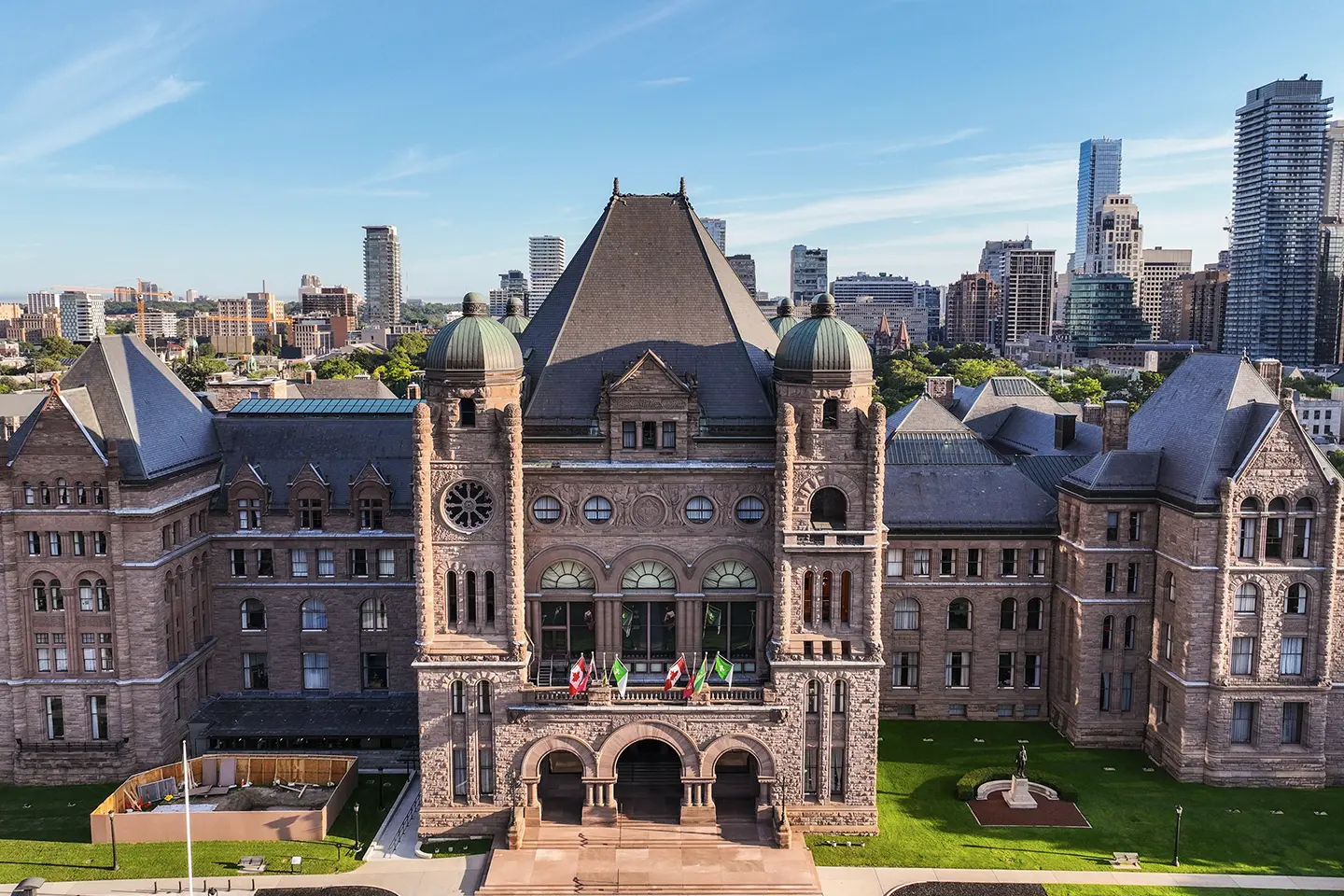
Aerial view of parliament hill in ottawa
01
Accueil
02
Services
03
Secteurs
04
Équipe
05
Notre travail
06
Mises à jour
07
Carrières
08
Personne-ressource
Services
01
Relations avec le gouvernement
02
Communications et numérique
03
Services consultatifs
Secteurs
01
Énergie
02
Environnement
03
Soins de santé
Mises à jour
01
Perspectives
02
Nouvelles
EN
FR
ServicesSecteursÉquipeNotre travailPerspectives
EN
FR
aperçus
mises à jour
October 16, 2023

Supreme Court Of Canada Declares Federal Impact Assessment Act Largely Unconstitutional

Écrit par
Équipe fédérale
Supreme Court Of Canada Declares Federal Impact Assessment Act Largely Unconstitutional

Canada's Supreme Court ruled on Friday that a federal law which oversees the assessment of major infrastructure projects is largely unconstitutional, a decision that will spur an overhaul of the federal environmental approval process.

The Impact Assessment Act (IAA) 2019, formerly known as Bill C-69, was deemed unconstitutional on the grounds that it gave the federal government too much oversight of projects that fall under provincial constitutional jurisdiction. Prime Minister Trudeau’s cabinet designed the IAA to streamline and restore trust in the environmental approval process for major projects after changes made by the Harper Government. It appears, however, that in doing so they overstepped the parameters of federal authority for certain types of projects.  

In short, the Supreme Court ruled 5-2 that a part of the act "intrudes more than incidentally into the provinces' constitutional sphere."

Chief Justice Richard Wagner commented that "environmental protection remains one of today's most pressing challenges, and Parliament has the power to enact a scheme of environmental assessment to meet this challenge, but Parliament also has the duty to act within the enduring division of powers framework laid out in the Constitution.”

The Act and its regulations establish a two-part information gathering and regulatory scheme. The first part, which is described in sections 81 to 91 of the Act, outlines an impact assessment process for projects carried out or financed by federal authorities on federal lands or outside Canada. It requires the federal authority to determine whether the project is likely to cause significant adverse environmental effects. If so, it must then be determined whether these effects are justified in the circumstances.

The second part, which includes the remaining provisions in the Act and the regulations, outlines the projects considered "designated projects" under the Act and automatically makes them subject to federal review.

While sections 81 to 91 of the Act were found to be constitutional, the "designated projects" portion of the Act was deemed unconstitutional for two main reasons. Firstly, it does not regulate "effects within federal jurisdiction" defined in the Act, as these effects do not influence the decision-making process. Secondly, the term "effects within federal jurisdiction" does not align with federal legislative jurisdiction. In short, the scope of the types of projects captured under the legislation and enabling regulations was too broad and exceeded Canada’s constitutional authority.

Next Steps:

The Government of Canada has accepted the ruling of the Supreme Court, and Minister Guilbeault and Minister Virani will be working with stakeholders and Indigenous Communities to determine the next steps. As noted at a press conference last week in response to the ruling, the government will seek to ensure clarity and that Canada is a stable place for investment. However, much work remains ahead.  

Sussex stands ready to work with clients and stakeholders in communicating directly to Canada as it looks to advance the next steps on an updated Assessment Act.

Happy to Help

Make Sussex Your First Call for All Your Government Needs

Our consultants have detailed knowledge and expertise to assist our clients in navigating provinces, territories, and the federal government. Our robust experience throughout Canada allows us to provide detailed and specific counsel to you. We look forward to continuing to put our expertise to its best use as your advisors during this next term of council and beyond.

Devin McCarthy
Associé directeur
dmccarthy@sussex-strategy.com
voir le profil
Roberto Chavez
Vice-président, Fédéral et Énergie
rchavez@sussex-strategy.com
voir le profil
Dan Lovell
Vice-président, fédéral
dlovell@sussex-strategy.com
voir le profil
partager l'article
Lien copié
‍

Messages récents

Le premier ministre Doug Ford remanie son conseil des ministres avant une importante session parlementaire d'automne
September 10, 2026

Le premier ministre Doug Ford remanie son conseil des ministres avant une importante session parlementaire d'automne

Le remaniement ministériel d’aujourd’hui ne se limite pas à combler des postes vacants ou à redistribuer des responsabilités. Bien que certains changements aient été motivés par des départs du Conseil des ministres au cours de l’été, notamment ceux de Caroline Mulroney, Stan Cho et Neil Lumsden, un remaniement ministériel demeure, en fin de compte, un exercice de priorisation politique et stratégique.

Élections Québec 2026 : le changement a lancé la course, mais le leadership économique pourrait maintenant décider de l’issue
September 1, 2026

Élections Québec 2026 : le changement a lancé la course, mais le leadership économique pourrait maintenant décider de l’issue

Au début de l'année, le principal moteur politique au Québec était le désir de changement après huit années de gouvernement de la Coalition avenir Québec (CAQ).

L'avantage du Canada en matière de ressources n'est qu'un point de départ
September 1, 2026

L'avantage du Canada en matière de ressources n'est qu'un point de départ

À l'aube d'un automne déterminant, les questions entourant le commerce, la sécurité économique et la relation du Canada avec les États-Unis prennent une urgence nouvelle. Les minéraux critiques offrent un aperçu révélateur de ce qui s'en vient.

voir tout
Je vous remercie ! Votre soumission a bien été reçue !
Oups ! Quelque chose s'est mal passé lors de la soumission du formulaire.
entreprise
AccueilÉquipeCarrièresPersonne-ressourceModalités et politiquesAccessibilité
explorer
ServicesSecteursNotre travailMises à jourS'abonner
suivez-nous
Ce site a été traduit automatiquement à l'aide des outils de localisation de Webflow.
TOUS DROITS RÉSERVÉS © 2020
Reconnaissance des terres